


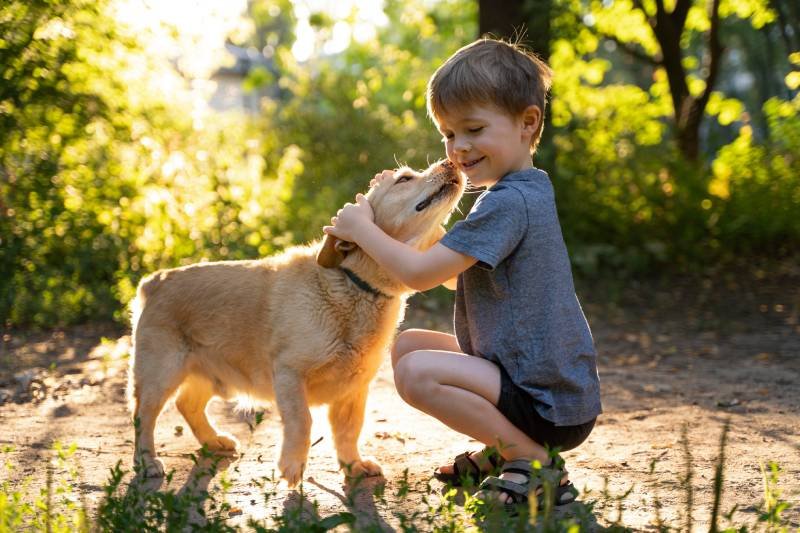
How a Calm and Sensory-Friendly Space Positively Helps Children Learn
For many children with Autism Spectrum Disorder (ASD), developing social skills can be a significant challenge. Navigating social cues, understanding emotions, and engaging in reciprocal conversations often requires specialized support. At Eastwind Cares, we’ve seen firsthand how our canine-assisted therapy model provides a unique and powerful bridge to building these essential skills.
Unlike human interactions that can be complex and unpredictable, a therapy dog offers a simple, nonjudgmental partnership. Their presence naturally lowers anxiety and creates a safe space for children to practice social engagement without fear of criticism.
A dog is a consistent and responsive partner, making them ideal for children who may struggle in traditional therapy settings.
How Goal-Based Activities Foster Social Growth
Our sessions are far more than just playtime. Each activity is a carefully designed therapeutic routine that targets specific social skills. Whether it’s learning to give commands, engaging in cooperative play, or participating in grooming, these interactions are rich with learning opportunities, including:
- Turn-taking and sharing: Learning to share toys or wait for their turn to give the dog a command.
- Understanding non-verbal cues: Learning to read a dog’s body language—like a wagging tail or a relaxed posture.
- Perspective-taking and empathy: Considering the dog’s needs, such as providing water when it’s thirsty.
By teaching a child to notice if the dog is “happy” or “tired,” we are teaching them to read body language. These small, successful moments build on each other, creating a foundation of social confidence that translates into the child’s daily life.